
A semi-crystalline plastic known for high strength and fatigue resistance. It is often the default choice for mechanical parts (gears, bushings).
Nylon (Polyamide) is one of the most versatile engineering thermoplastics. For manufacturing, it is essential to distinguish between the various “types” of Nylon, as their processing requirements and mechanical behaviors differ significantly.
Easier to process due to a wider processing window and a lower melting point (approx. 220°C). It generally offers slightly better impact resistance and easier mold flow.
Common Uses: Parts requiring good surface finish and toughness, such as consumer components and standard industrial clips.
Higher melting point (approx. 260°C) and superior rigidity/stiffness compared to PA6. It offers better heat deflection temperature and wear resistance.
Common Uses: High-performance structural parts, automotive engine components, and heavy-duty gears.
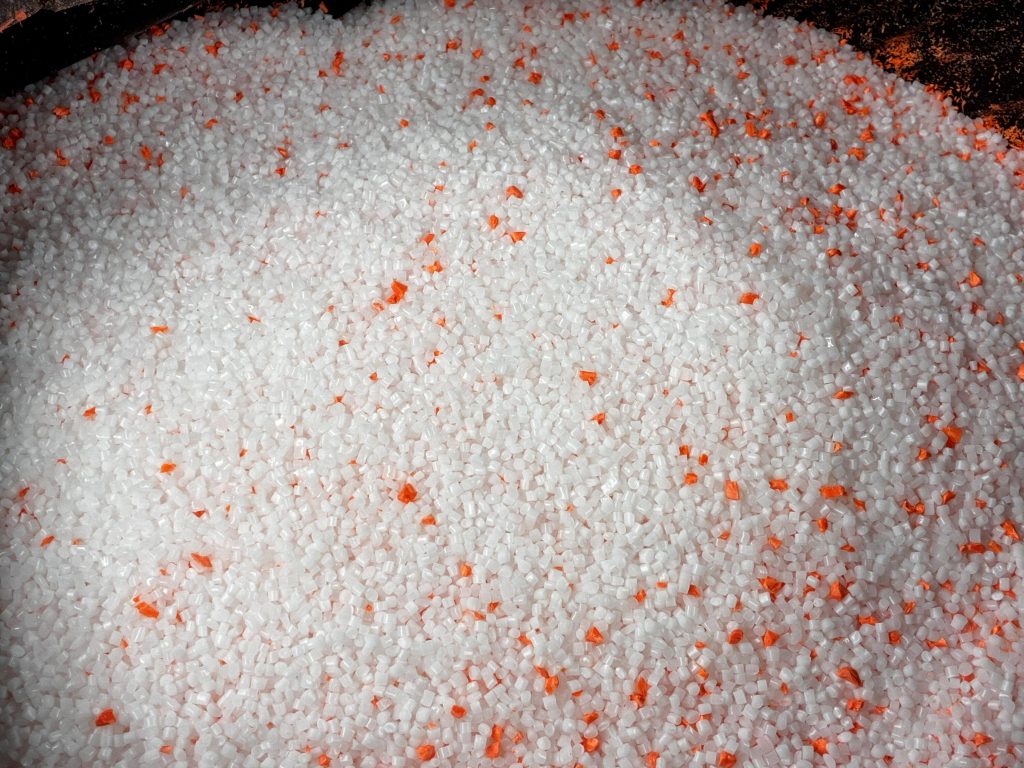
Nylon is highly hygroscopic, meaning it acts like a sponge. It absorbs moisture from the atmosphere.
- The Impact: If moisture content exceeds 0.1%–0.2% (depending on the grade) before injection, it causes hydrolysis during the melting process.
- Processing Defect: This results in "splay" (silvery streaks on the surface), reduced viscosity, and a significant drop in mechanical strength.
- Requirement: You must use a desiccant dryer to bring moisture levels down to the resin manufacturer’s recommended range (typically <0.1%).