
Robotics Parts
The ultimate convergence of technologies.
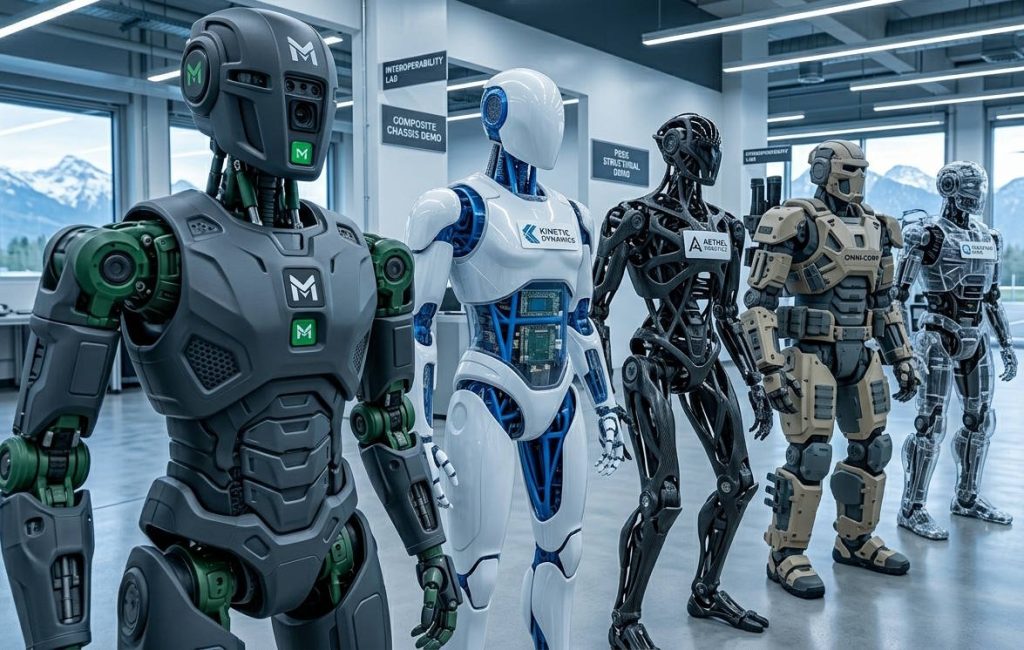
Manterra Technologies is strategically positioned as one of North America’s premier manufacturing partner for the robotics sector. Our facility in Delta, British Columbia, combines automotive-grade precision with aerospace-level material science, providing a secure, highly capable domestic alternative to offshore production.
A highly capable domestic alternative to offshore production.
The robotics and android industry represents the ultimate convergence of mechanical engineering, sensor fusion, and artificial intelligence. To bring these systems from the lab to commercial viability, manufacturers need specialized polymer components that reduce weight without sacrificing structural integrity or sensor fidelity.
- Structural Exoskeletons & Metal-to-Plastic Conversion
- Advanced Gripping, Haptics, and "Skin" Integration
- Zero-Defect Sensor and Vision Housings
- Modularity and High-Torque Mounting
- Environmental Hermetic Sealing
- North American IP Protection and Agile Logistics
- IATF 16949 Certified Reliability
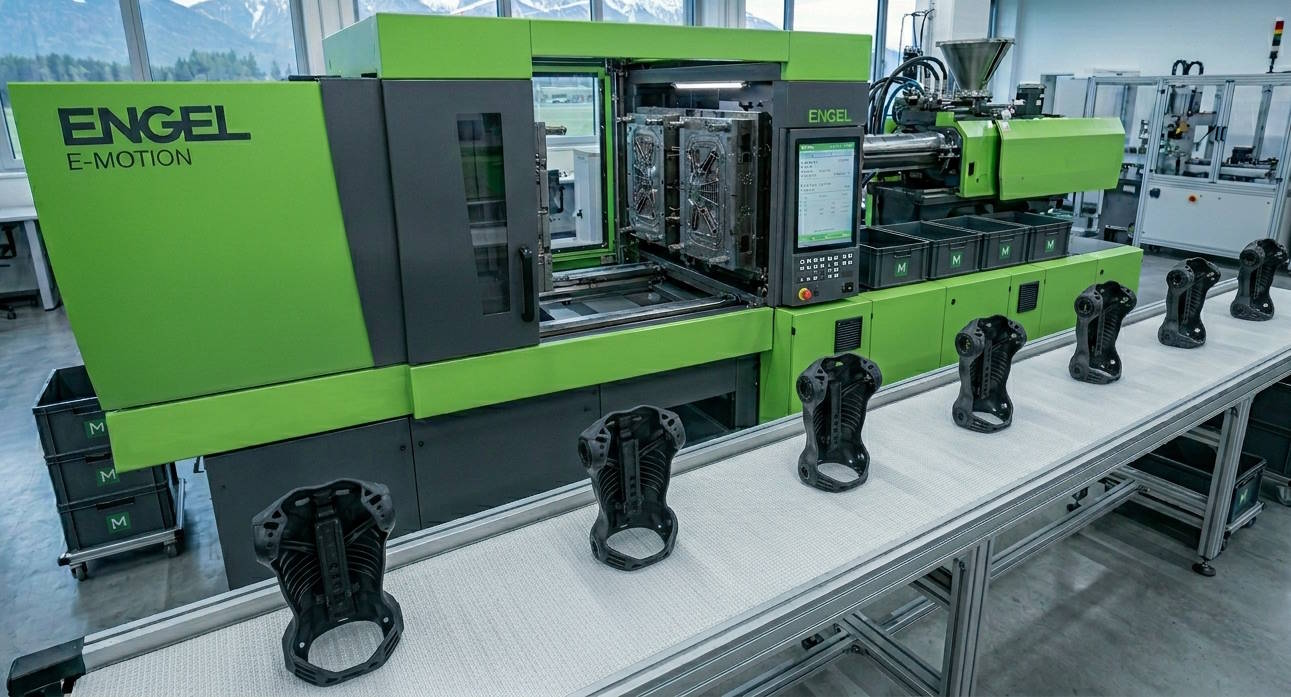
Structural Exoskeletons & Metal-to-Plastic Conversion
Humanoid robots must balance payload capacity and battery efficiency, making weight reduction critical. Manterra excels in replacing heavy machined metal parts with high-performance engineering resins like PEEK, PEI (Ultem), and glass-filled composites.
Utilizing our larger 300 to 450-ton presses, we can mold substantial rigid components like torso chassis, limb segments, and joint housings. Parts that benefit from the immense tensile strength, dimensional stability, and impact resistance of our engineering polymers at a fraction of the weight of aluminum.
Advanced Gripping, Haptics, and "Skin" Integration
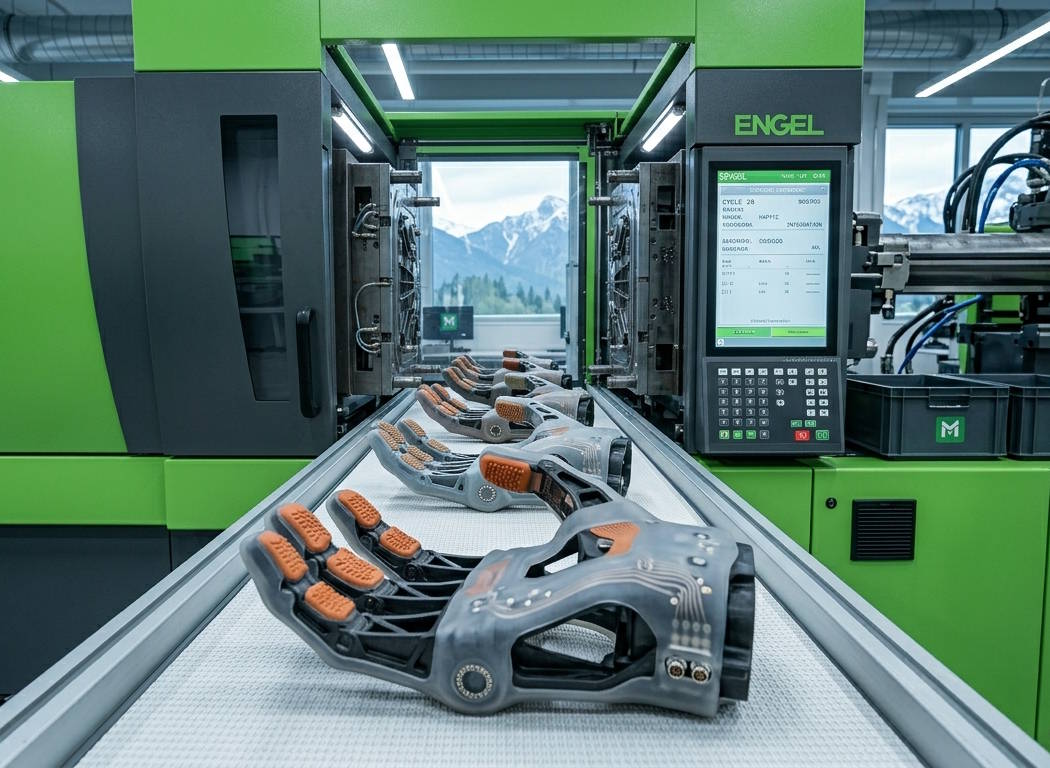
For collaborative robots (cobots) and androids designed for human interaction, the tactile surface is just as important as the mechanics. We leverage sophisticated elastomer overmolding and 2-shot injection molding to create complex end-effectors and protective skins.
We can mold soft, high-friction thermoplastic elastomers (TPE) directly onto rigid skeletal substrates. This allows us to produce precise robotic grippers with integrated soft-touch pads, joint dust-boots, and vibration-dampening bumpers in a single, perfectly bonded manufacturing step.
Zero-Defect Sensor and Vision Housings
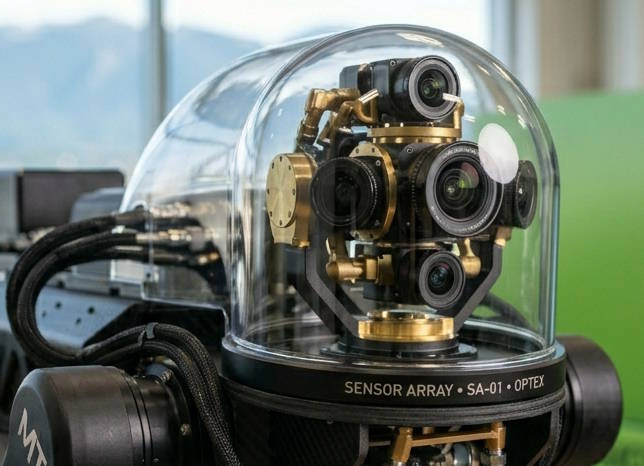
A robot is entirely dependent on its sensor array. Autonomous navigation and object recognition require LiDAR, infrared arrays, and stereoscopic cameras to operate flawlessly. Manterra’s optically clear molding capabilities ensure that transparent domes, protective lens covers, and light pipes are manufactured with absolute optical purity.
Processed using advanced automation techniques to prevent birefringence and flow marks, our optical components guarantee zero distortion for machine-vision systems.
Modularity and High-Torque Mounting
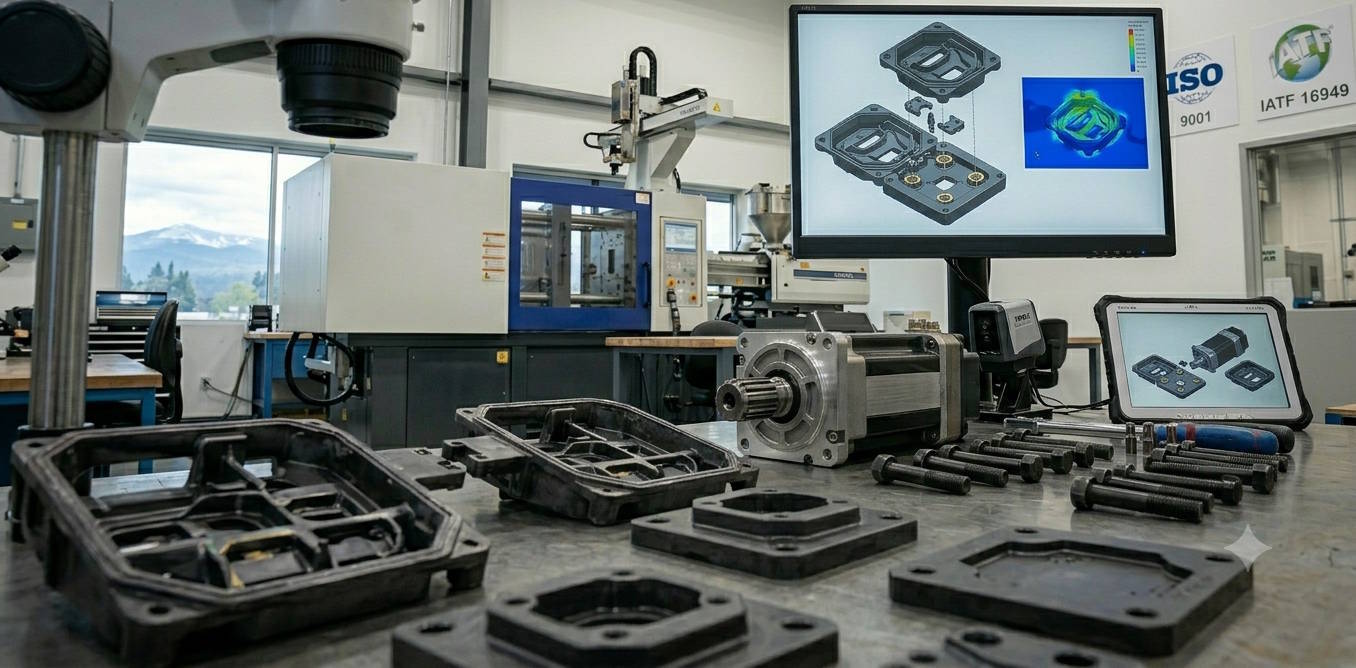
Robots are highly modular, requiring frequent maintenance, upgrades, and high-torque connections where servos and actuators meet the plastic chassis. Standard molded threads strip under this mechanical stress. We utilize precision ultrasonically welded inserts to embed brass and stainless steel threaded receivers directly into our molded components.
Environmental Hermetic Sealing
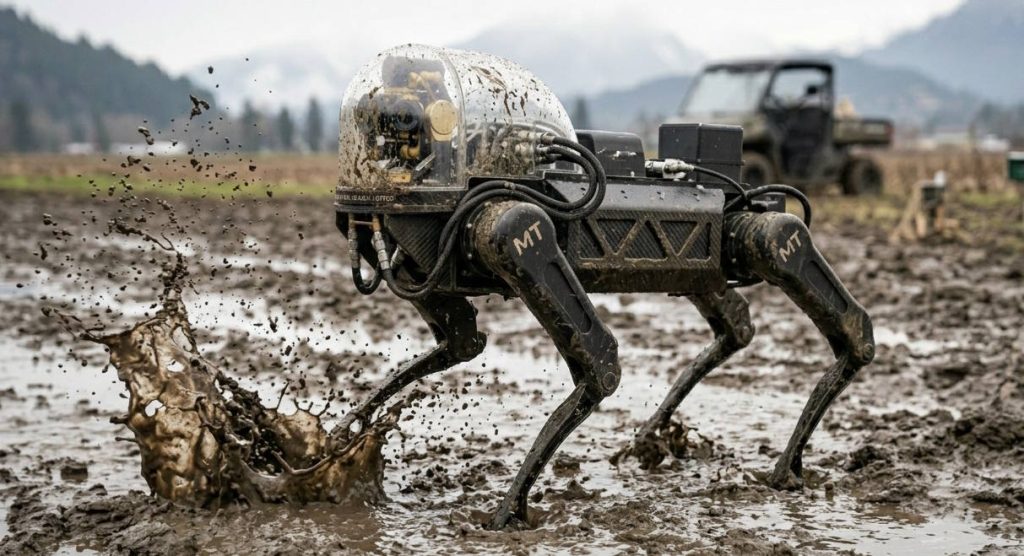
For robots deployed in industrial, agricultural, or outdoor environments, central processing units and servo motors must be protected from moisture, dust, and chemical ingress.
Manterra’s expertise in overmolded elastomers allows us to fuse complex 3D plastic assemblies with a strong hermetic seal. This ensures that sensitive internal robotics are fully weatherproofed without relying on bulky mechanical gaskets or messy silicone sealants.
North American IP Protection and Agile Logistics
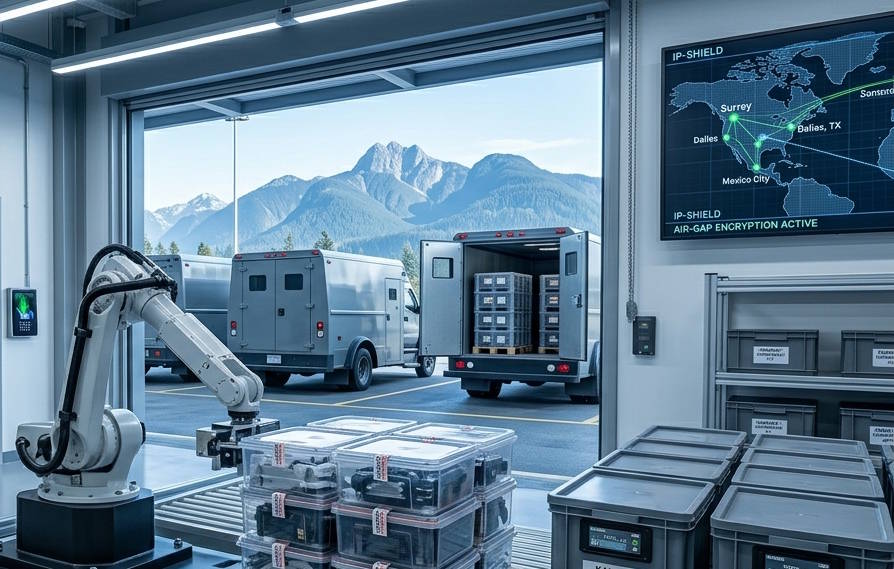
The robotics sector is highly competitive, and protecting intellectual property is paramount. By partnering with Manterra, North American robotics companies eliminate the profound IP risks associated with offshoring proprietary hardware designs. Furthermore, operating out of British Columbia under the CUSMA/USMCA framework allows us to seamlessly supply the broader North American market.
We support Kanban and Just-In-Time (JIT) production directly from our 15-machine fleet, ensuring that robotics assembly lines have a secure, responsive, and tariff-friendly supply chain.

IATF 16949 Certified Reliability
When an autonomous robot is moving heavy payloads or interacting with humans, hardware failure is not an option. Manterra operates under IATF 16949 certification, which is the highest standard of automotive quality management.
We apply these exact same rigorous defect-prevention protocols and full traceability standards to our robotics manufacturing, ensuring every component meets the exacting safety and performance thresholds required for commercial deployment.