
Insert Molding (Overmolded Inserts)
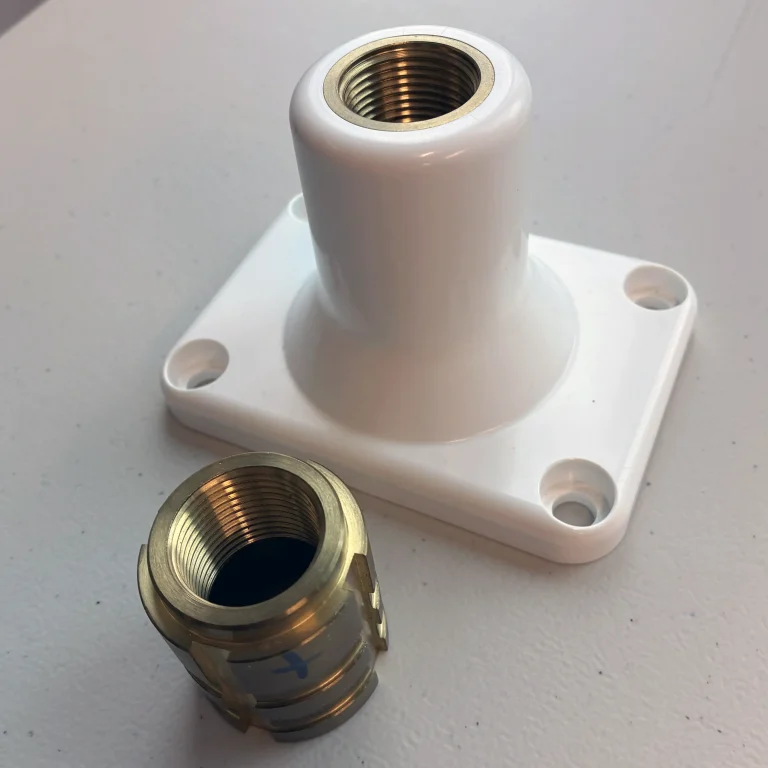
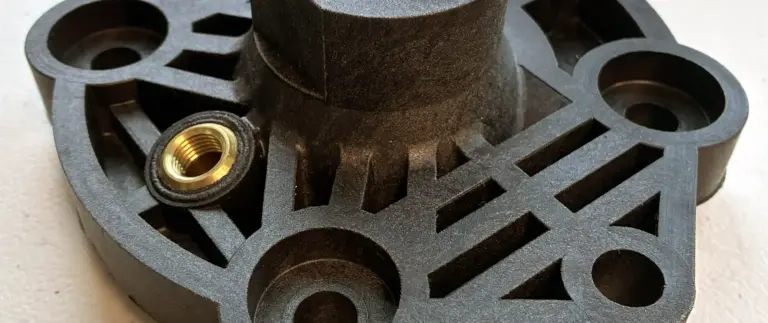
Manterra provides insert molding in Delta, BC, Canada. We place brass or steel inserts, bolts, shafts and other metal components into the mold and inject the plastic around them, so each part comes off the press with strong, reusable threads or metal features already built in.
How Insert Molding Works
Before each shot, the inserts are loaded into the open mold by an operator or a robot, where pins, pockets or magnets hold them in exactly the right position. The mold closes and the plastic flows around the insert, filling its knurls, grooves and undercuts. As the plastic cools it shrinks tightly onto the metal, locking the insert in place mechanically. Inserts can be preheated before loading, so the plastic flows fully around them and the part carries less stress as it cools.
Why Choose Insert Molding?
Plastic threads wear quickly and strip under high torque, and inserts pressed in cold after molding often fall short on torque and pull-out resistance. A molded-in insert is surrounded by plastic on every side, which gives the highest pull-out and torque strength of any insert method. The same process also handles metal parts that aren’t threaded inserts at all, such as shafts, pins, studs, antenna cores and electrical terminals, and it removes an assembly step.
Insert Molding or Ultrasonic Insertion?
Both give a plastic part metal threads. Insert molding gives the strongest hold and works with almost any metal component, but loading inserts adds time to every cycle and the tool must be built to locate them. Ultrasonic insertion presses threaded inserts into molded holes after molding, which keeps the molding cycle fast and the tool simpler, at somewhat lower strength. For high-torque joints, or metal features other than threads, molding the insert in is usually the better choice. See Ultrasonically Welded Inserts for the other method.
Designing for Insert Molding
Leave enough plastic around each insert. As the plastic shrinks onto the metal it is under tension, and a thin wall can crack, especially in brittle resins. Tough materials such as nylon, polycarbonate and PBT hold inserts well. Inserts need knurls, grooves or undercuts for the plastic to grip, and threads need to be sealed off by a blind end or a core pin so plastic can’t flow into them. Inserts should come from a supplier who holds tight, consistent dimensions, because the mold has to close on every one. We review these details with you before tooling.
Materials for Insert Molding
Most thermoplastics can be molded around metal, but some hold inserts better than others. Nylon, glass-filled nylon, PBT, polycarbonate, PC/ABS, ABS and acetal are common choices. Brittle resins such as acrylic need thicker walls around each insert to resist cracking, and glass-filled grades shrink less, which reduces the stress around the metal. We’ll recommend a resin based on the torque, temperature and environment the part has to handle.
Getting Every Insert Right
Every part depends on every insert being present and fully seated before the mold closes. A missing insert means a scrap part, and a misplaced one can damage the tool. We plan insert loading, part checks and first-article measurements on our Zeiss CMM so each insert sits where your drawing puts it. Inserts can also be combined with an overmolded grip or seal on the same part.
Insert Molded Parts We Make
- Plastic interfaces with molded-in brass threaded inserts
- Engine components with molded-in bolts and shafts
- Antenna mounts molded around a brass core
- Connectors and housings with molded-in electrical terminals
See these parts in our parts gallery.